Shop
The items below are for sale. For ordering and wait-list information, please see the Contact page.
Dovetail Saws - $150 - Wait List
I'm accepting pre-orders for a batch of dovetail saws, with work on orders starting May 1, 2026.
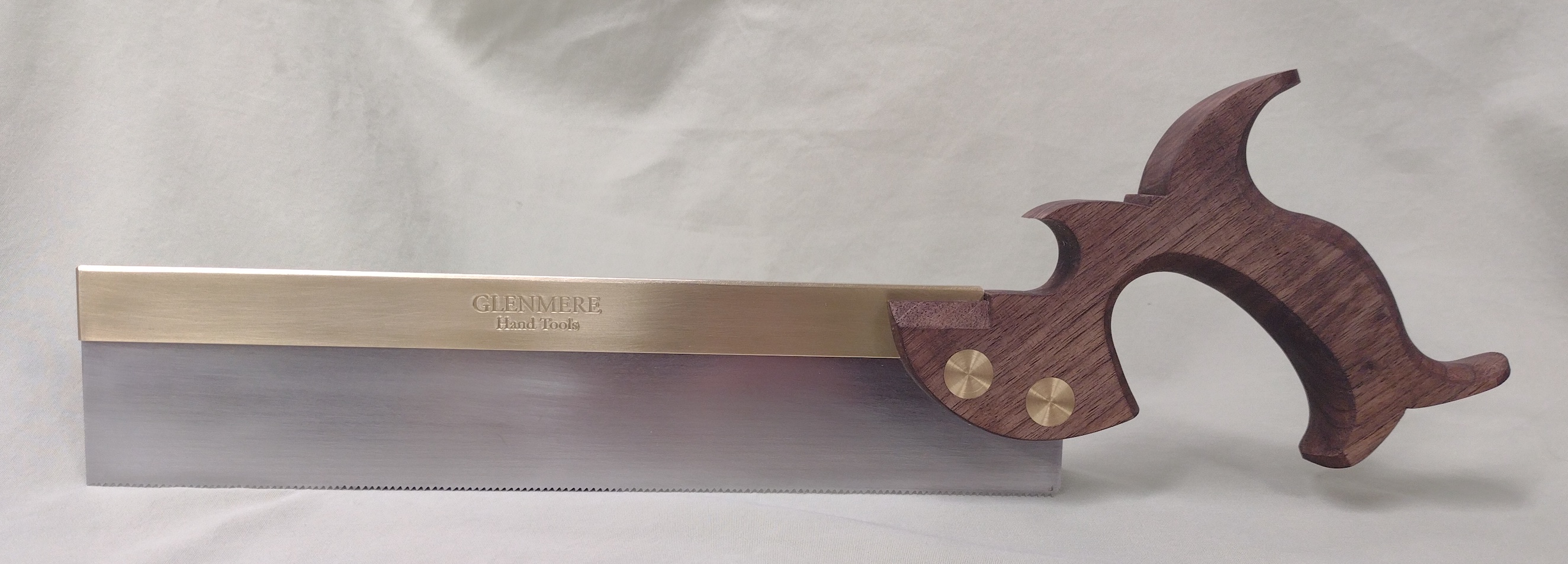
Specifications:
- The saw plate is 0.020" thick (nominal), 10 inches at the tooth line, 1095 blue tempered spring steel.
- Teeth are 15 PPI, filed rip with a 15 degree rake angle.
- Teeth are punched, hand-sharpened, and set.
- The maximum depth of cut (the distance from the tips of the teeth to the bottom of the brass back) is 1.5 inches.
- The back and saw nuts are 360 free-machining brass.
- Saw handles are available are beech, padauk, walnut, and maple. Finished with Birchwood Casey Tru-Oil.
A user's guide for the saw is available here.
Dovetail Saw Kits - Wait List
These kits provide the metal parts necessary to make a complete dovetail saw. See this video for an overview of my process for making these kits.
- Saw Plate ($35): 0.020" thick, 2" wide, 9" long, 15 PPI, 15 degree tooth angle
- Saw Bolts/Nuts ($20): Two saw nuts, 1/2" diameter head.
- Saw Back ($30): Slotted for 0.020" plate, chamfered, not stamped.
Plane Adjustment Hammers - $50
In the Spring of 2024, I made four brass plane adjustment hammers.
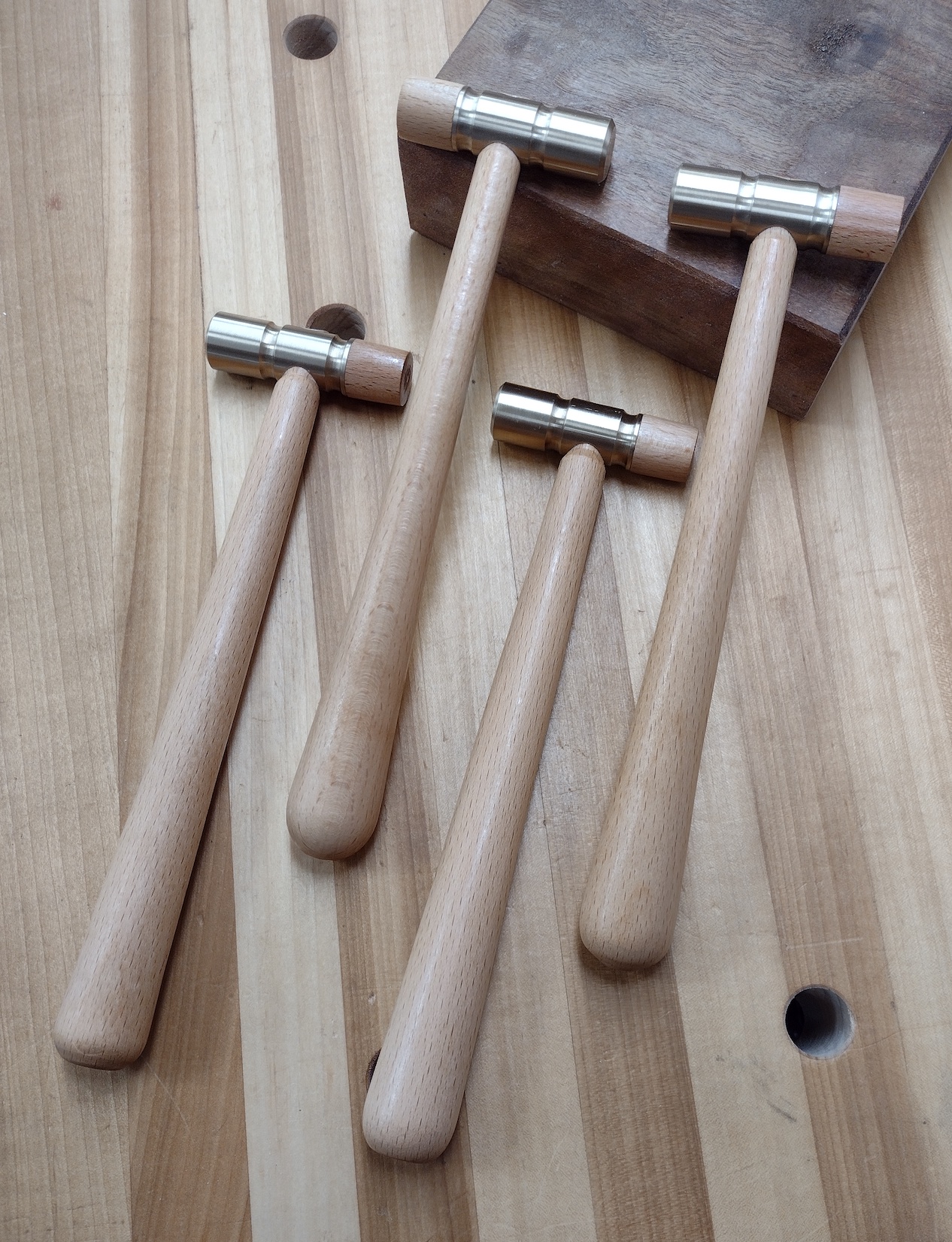
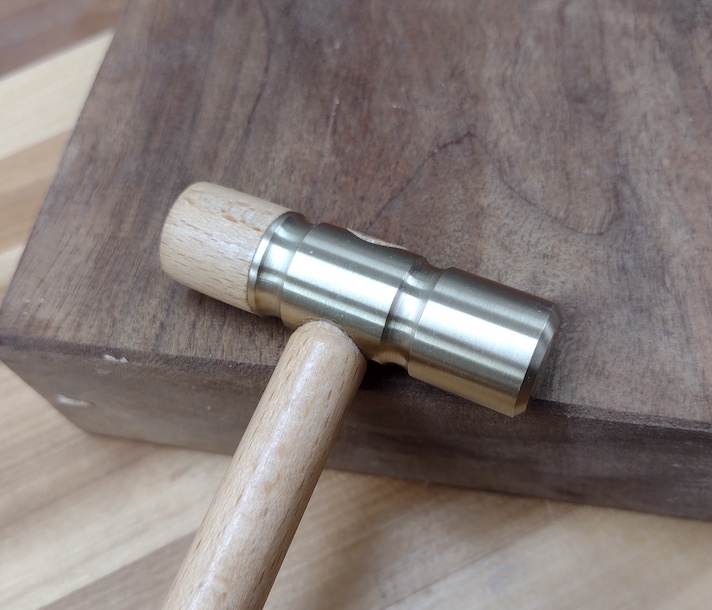
Specifications:
- The hammer is made from 693 brass.
- The handle and soft face are made of beech.
- Total weight for the hammer is 140 grams / 5 oz.
- The hammer is approximately 9.5 inches long.
A user's guide for the brass adjustment hammer is available here.
Edge Floats - $50
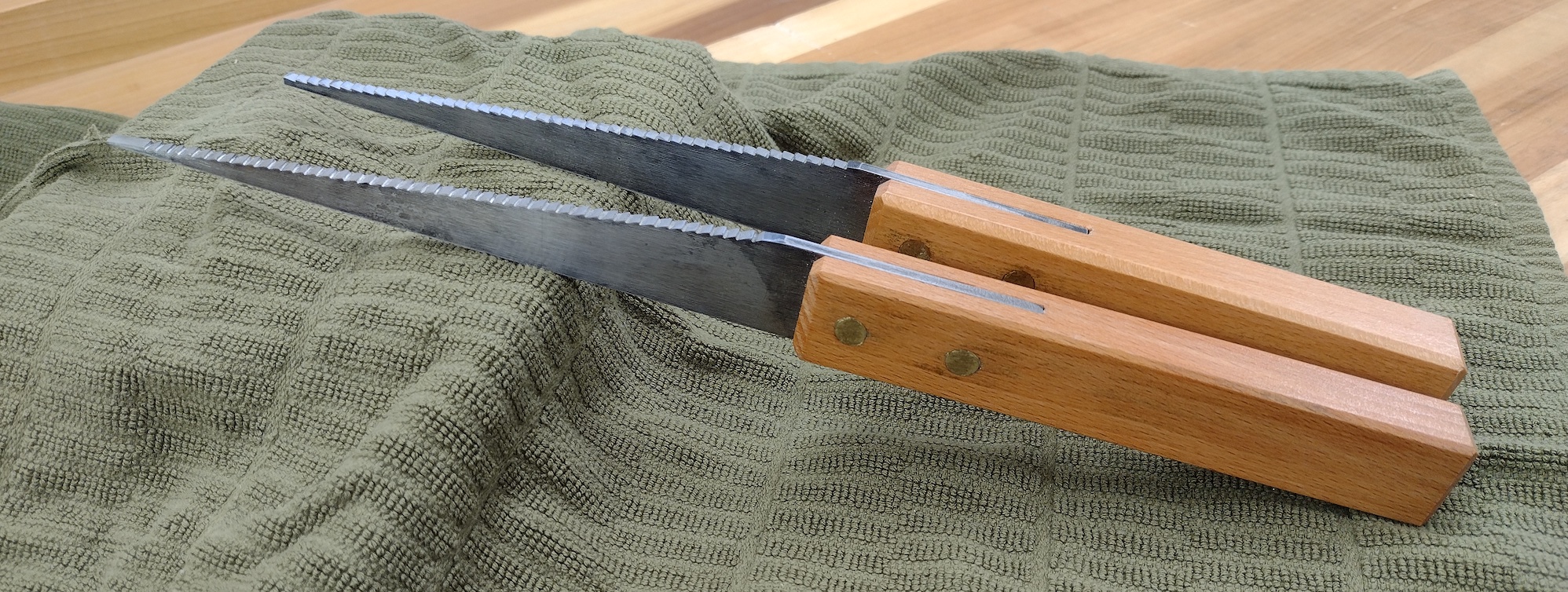
An edge float is a triangular piece of hardened steel that cuts fine shavings on either the push or pull stroke, similar to a saw or file.
Specifications
- Edge floats are O1 steel. They are hardened and sufficiently tempered that they can still be sharpened with a file.
- The float blade is 1/8 inch thick, with teeth spaced 1/8th inch apart.
- The float handles are beech finished with linseed oil and shellac. Handles are attached with brass rivets.
When ordering, please indicate whether you would like a push or pull float. If in doubt, I recommend starting with a push float.